Every generation gets its own cautionary tale about shortcuts. For Gen Z, one of the latest is Obsession.
On the surface, it’s a psychological horror film about Bear Bailey, a music store employee, discovers the One Wish Willow-a magical shortcut that promises to make his long time crush, Nikki Freeman, fall in love with him. His wish comes true, but not in the way he imagined. What begins as a solution slowly turns into possession.

The Willow isn’t inherently evil. It simply grants Bear exactly what he asks for, without questioning whether that’s what he truly needs. AI adoption looks surprisingly similar.
As a Gen Z, I love when a piece of pop culture becomes more than entertainment. Sometimes it unexpectedly explains the way we think about technology better than another whitepaper or conference talk ever could. It gives us a language for recognizing patterns we might otherwise miss.
That’s exactly what Obsession did for me. It wasn’t just a psychological horror film, which is funny because after watching it, I realized we might be doing the exact same thing with AI. Not because AI is dangerous. But because, much like Bear in the film, we sometimes become so focused on getting the outcome we want that we stop questioning the path we’re taking.
Every AI Initiative Starts with Good Intentions
Let’s automate documentation.”
“Let’s summarize meetings.”
“Let’s build a support agent.
Nothing about these ideas is inherently wrong. In fact, many of them create real value. The challenge begins when AI quietly shifts from being a means to becoming the objective itself.
At some point, the conversation changes. Instead of asking,
Does this create value?
Teams begin asking,
Where else can we put AI?
That’s the same version of making another wish.
AI Maturity Isn’t About Building More AI
Bear doesn’t lose himself because of one decision. He loses himself because every decision after the first becomes easier to justify. Teams experience the same drift.
Teams that misunderstand AI maturity decided to measure success by adoption.
- How many AI features are shipped?
- How many agents are running?
- How many workflows use LLMs?
Mature teams measure something entirely different.
- Which workflows actually improved outcomes?
- Which ones reduced operational cost?
- Which one customer genuinely use?
- Which ones should never have been built?
AI maturity is measured by how deliberately AI is introduced and how confidently teams choose not to use it when it doesn't add value.
Governance Exists to Interrupt Momentum
One of the quietest tragedies in Obsession isn't the wish itself. It's that Bear stops questioning whether the outcome he's chasing still has meaning. He becomes focused on preserving the wish rather than understanding its consequences.
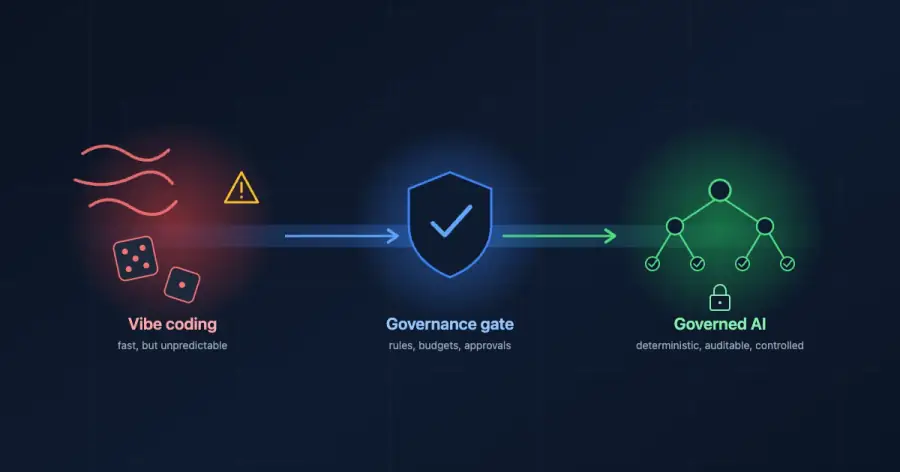
AI governance exists for exactly this reason. Its job is to protect the quality of decision-making.
Governance creates space for teams to keep asking questions that momentum tends to erase.
- Why are we using AI here?
- Does this solve a customer problem?
- Is AI actually the best approach?
- Would a simpler workflow achieve the same result?
- What happens if we remove AI entirely?
The Most Expensive Prompt Is the One That Never Needed to Exist
Engineering practices like token optimization, caching, workflow orchestration, and production-ready AI systems are incredibly valuable. But they all assume one thing: that the workflow itself deserves to exist.
The workflow deserves to exist if they’re valuable. Before optimizing prompts, teams should first optimize the decision that introduced the prompt in the first place.
Using AI wisely isn’t about saying yes to every opportunity. Using AI requires knowing when saying no creates more value than another workflow ever could.
The Difference Between Making Wishes and Making Decisions
The tragedy in Obsession wasn’t that Bear made a wish. It was that, once the wish worked, he stopped questioning whether it was still leading him toward what he truly wanted.
AI behaves much the same way. It can generate. Summarize. Classify. Automate.
But it won’t ask whether any of those things create meaningful value. That responsibility still belongs to us.
AI is incredibly good at granting wishes. Governance exists to make sure we’re wishing for the right things.
Still adding AI to everything?
Add AI where it actually earns its place
Unmeshed keeps AI, rules, and human approval in one workflow, so you don't have to guess which parts of the process actually need a model.