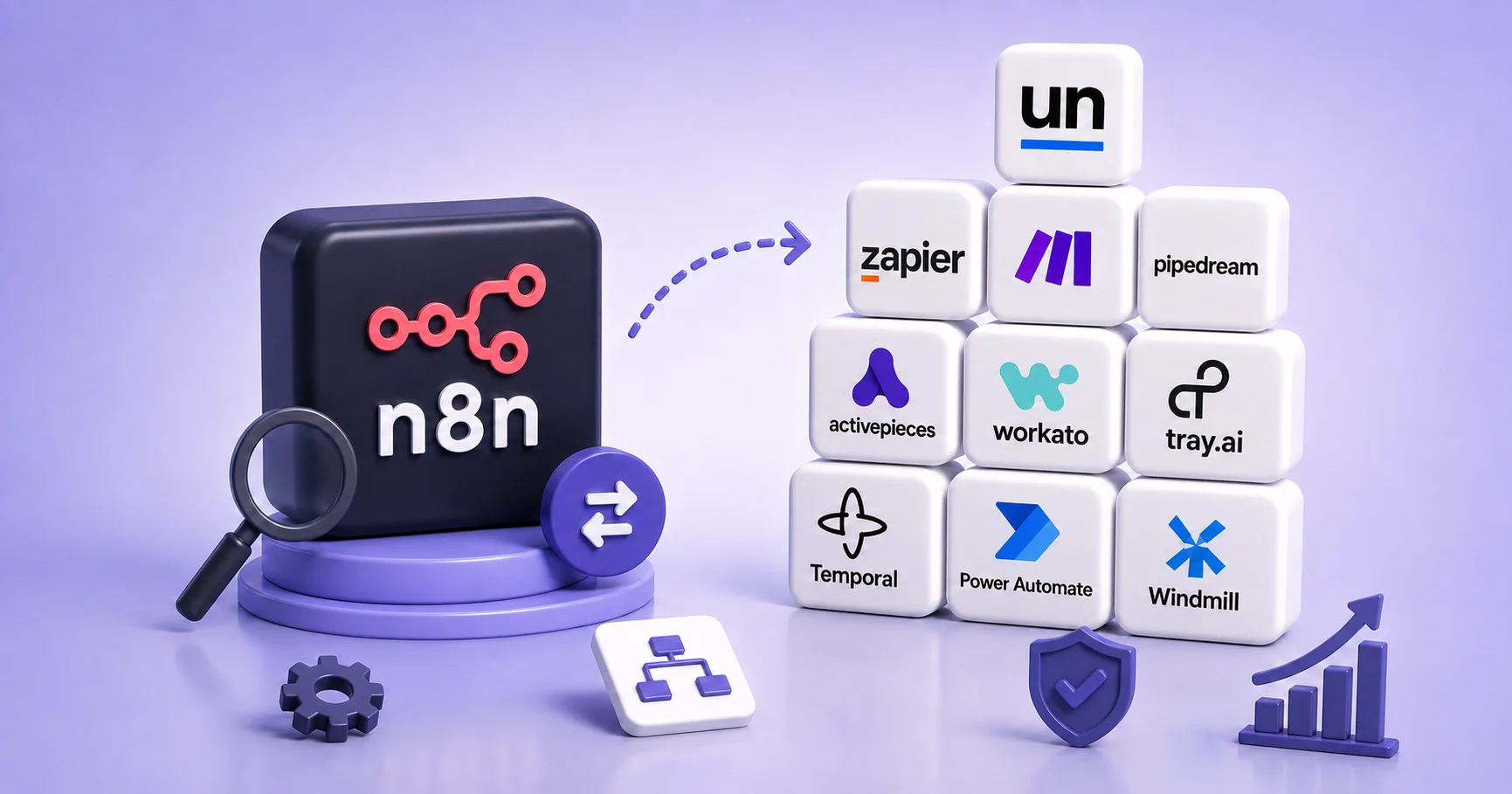
Every workflow orchestration tool markets itself as the last one you'll ever need. Every engineering team we've talked to is quietly unwinding from at least one of them right now.
So here are 9 of them, sized up honestly: what each one is actually good at, where it quietly falls apart, and what it costs once the free tier stops being the interesting number.
None of these are the no-code apps built for marketing teams to connect two SaaS tools. That's a real category, with its own list. This isn't it.
1. How We Evaluated These Workflow Orchestration Tools
Five criteria, applied the same way across every platform on this list:
- Execution model: deterministic code, visual rules, or both
- How AI steps fit in, if at all, alongside regular workflow logic
- Self-hosted vs. managed, and what that means for data control
- Time to a working, production-grade workflow
- Real, published pricing wherever a vendor discloses it
2. Workflow Orchestration Tools at a Glance
Here's the at-a-glance comparison table.
| Tool | Type | Pricing | Best For |
|---|---|---|---|
| Unmeshed | Workflow orchestration with AI, rules, and human steps | Free forever; Premium $20/mo | Teams that want AI, code, APIs, and human approval in one engine |
| Temporal | Durable execution engine | Cloud from $100/mo; self-hosted free | Long-running, fault-tolerant workflows written as code |
| Apache Airflow | DAG-based batch orchestration | Free (open source); managed from ~$100s/mo | Data pipeline scheduling with complex task dependencies |
| Camunda | BPMN process orchestration | Free SaaS tier; Enterprise negotiated | Regulated, developer-driven BPMN process modeling |
| Conductor OSS | Open source orchestration engine | Free and open source | Teams already running Netflix Conductor who want to stay self-hosted |
| AWS Step Functions | Cloud-native state machine | Pay-per-transition, from $0.000025/transition | AWS-native teams orchestrating Lambda and other AWS services |
| Google Cloud Workflows | Cloud-native deterministic orchestration | Consumption-based; free tier | Google Cloud teams needing lightweight service orchestration |
| Prefect | Python-native dataflow orchestration | Free tier; paid Cloud tiers | Data teams that want Airflow's power without the DAG overhead |
| Argo Workflows | Kubernetes-native container orchestration | Free (open source) | Teams already running Kubernetes who want workflows as YAML |
3. The Workflow Orchestration Tools, One by One
A. Unmeshed
Unmeshed is a workflow orchestration platform that treats AI steps, deterministic code, API calls, and human approvals as equal parts of the same workflow, not separate systems glued together after the fact.
Features
- Visual workflow builder backed by a real execution engine, not just a diagram
- Built-in decision tables for rules that would otherwise live in scattered code
- Native human-in-the-loop steps for approvals and manual review
- Agentic AI steps that sit next to regular workflow logic, not bolted on separately
- 100+ built-in integrations, plus hosted functions in Python, JS/TS, or Go
- A dedicated migration path from Conductor for teams outgrowing Netflix Conductor
- Changes to workflow logic ship without a redeploy, which matters more than it sounds like once a system is in production
Pros
- One engine for AI, rules, APIs, and human steps, instead of stitching four tools together
- Free forever tier covers 1,000 workflow runs and 1,000 AI agent calls a month
- Every step is logged, so debugging means reading one run history, not correlating logs across systems
- Live in weeks, not the multi-quarter migrations common with legacy orchestration platforms
- Adding an AI step doesn't mean routing everything through a model; rules and code still handle what they're good at
Most of the tools further down this list are strong at one specific thing: Temporal at durable code execution, Airflow at batch DAGs, Camunda at BPMN governance.
Unmeshed's bet is that most real workflows need several of those things at once, which is also why we've written about governed AI as an engineering problem rather than a policy afterthought, and about keeping token spend under control once AI steps are running at volume. Neither of those problems goes away just because a tool is good at orchestration in the narrow sense.
B. Temporal
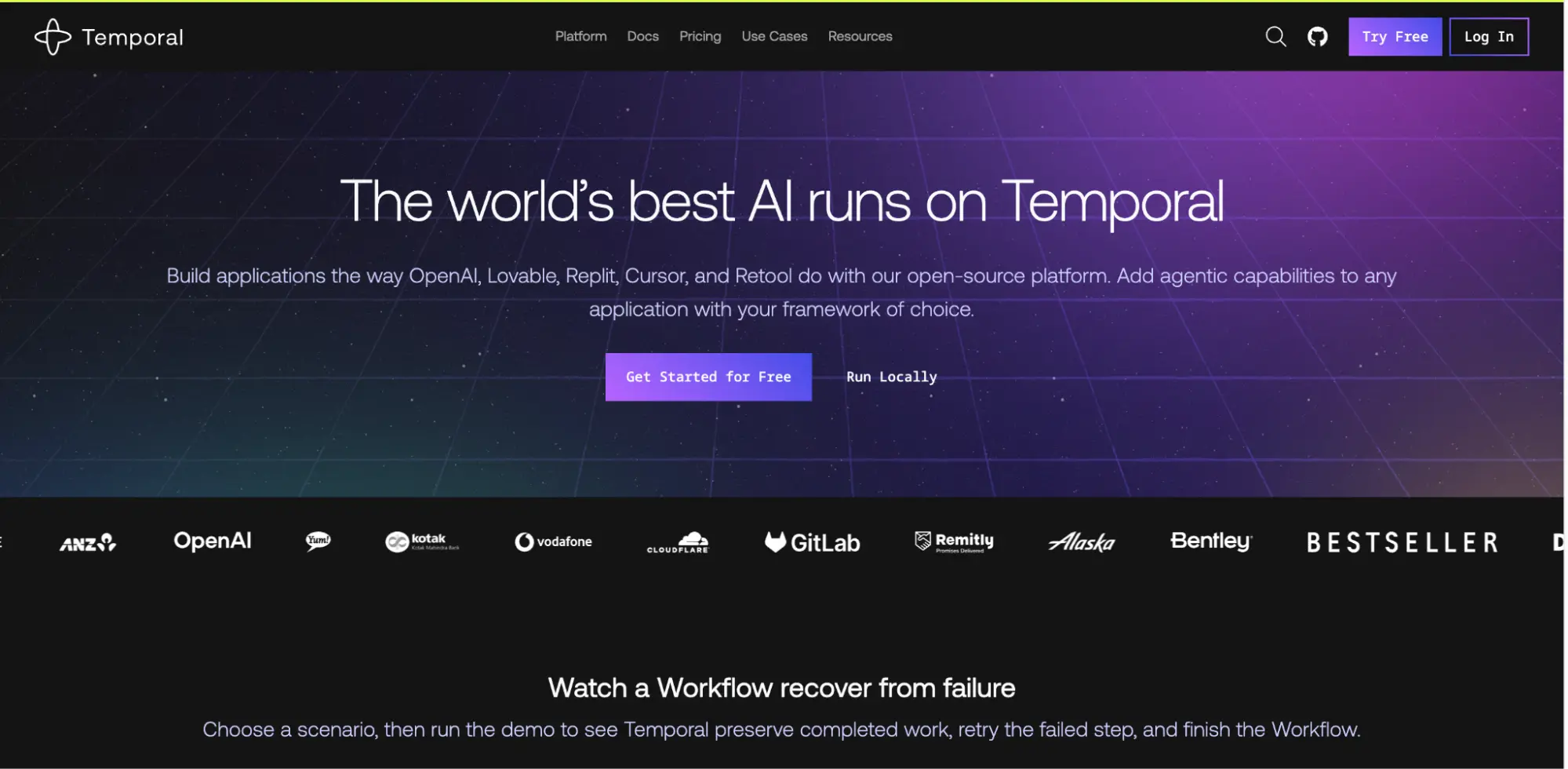
Temporal is a durable execution engine built for long-running, failure-prone workflows, written entirely as code in your language of choice rather than a visual builder.
Features
- Workflows written as ordinary code in Go, Java, TypeScript, Python, or .NET
- Automatic retries, timers, and state recovery across crashes and deploys
- Temporal Cloud managed offering, or fully self-hosted on your own infrastructure
Cons
- No visual builder; every workflow is code, which raises the bar for non-engineers
- Billing runs on Actions, Storage, and a plan fee, which takes some upfront modeling to estimate
- Self-hosting Temporal at production scale is a real operational commitment
Pricing
Essentials starts at $100/month for 1M Actions, Business starts at $500/month for 2.5M Actions, and Enterprise is custom. Self-hosted Temporal is free and open source.
C. Apache Airflow
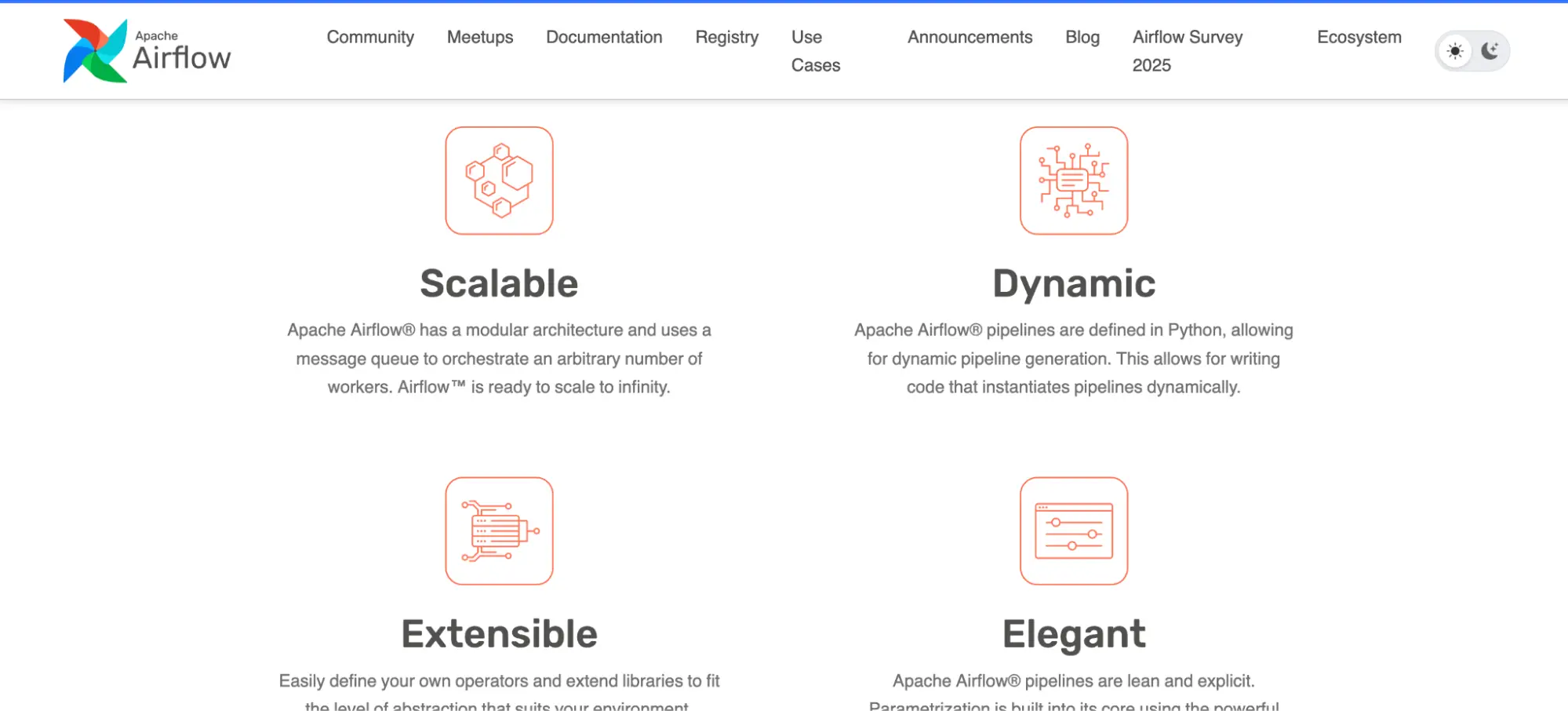
Apache Airflow is the default answer for teams scheduling data pipelines as directed acyclic graphs (DAGs), and it's been the open source standard in that space for close to a decade.
Features
- DAGs defined in Python, with a large library of pre-built operators
- Mature scheduler built for complex, dependency-heavy batch jobs
- Huge community, so most problems already have a documented answer
Cons
- Built for scheduled batch DAGs, not long-running or event-driven workflows
- Self-hosting and upgrading Airflow at scale takes dedicated platform engineering time
- No native human-in-the-loop or AI step primitives; both require custom work
Pricing
Free and open source. Managed options like Astronomer or Google Cloud Composer typically run in the hundreds of dollars a month depending on scale.
D. Camunda
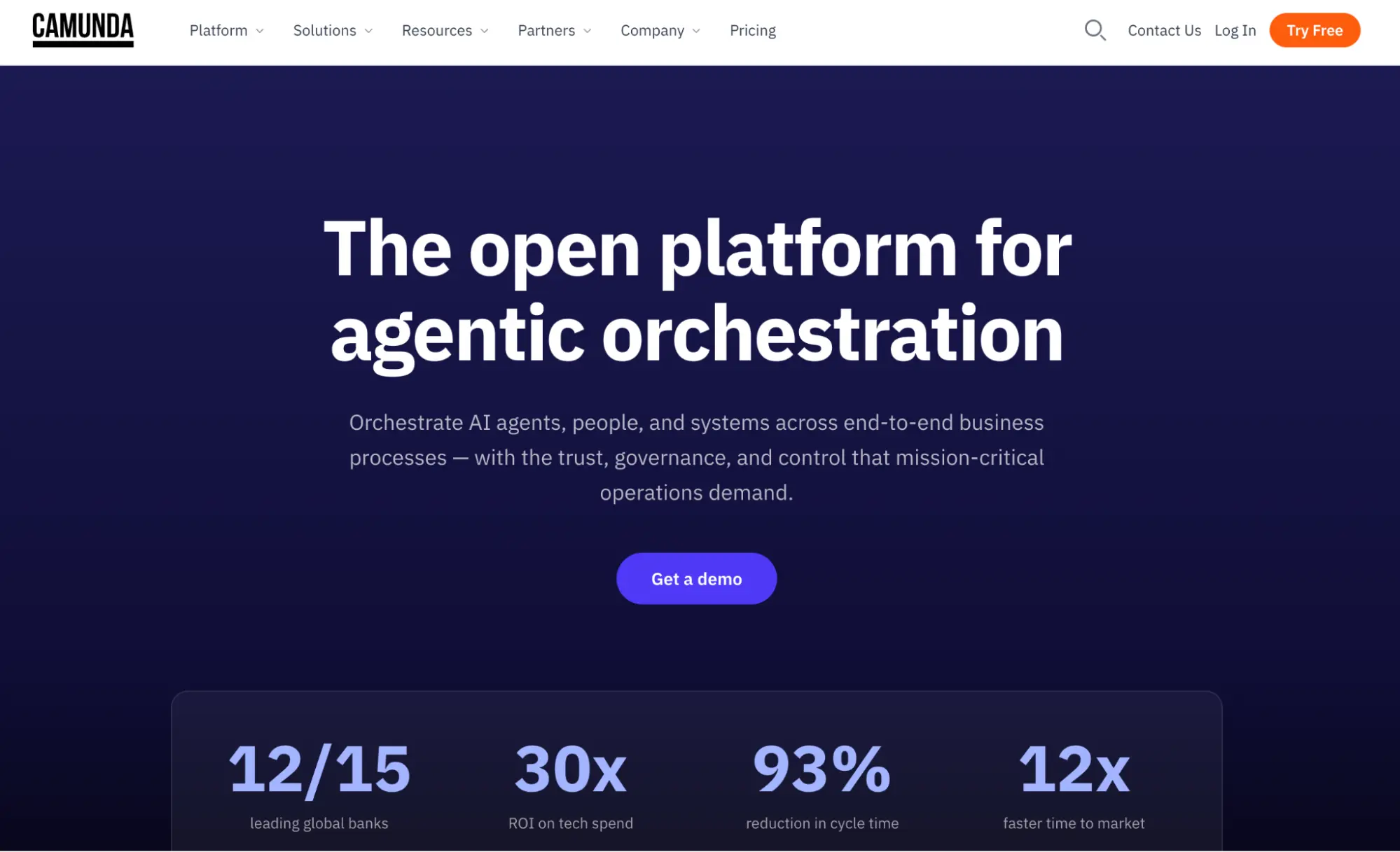
Camunda is a BPMN-based process orchestration engine built for developer-driven teams that want a standardized, portable process notation rather than a proprietary workflow format.
Features
- Business Process Model and Notation (BPMN) as the workflow definition standard
- Agentic orchestration that embeds AI agents inside BPMN workflows, with decisions logged and interruptible
- Open-core model, so the underlying engine is visible to technical teams
Cons
- Steep learning curve and limited out-of-the-box UI for non-technical users
- Zeebe, the core engine, requires an Enterprise license for production use
- Smaller mindshare than legacy enterprise workflow vendors, which thins the ecosystem
Pricing
Free SaaS tier with 5 seats and a 30-day Enterprise trial. Self-managed is free for non-production use only. Enterprise is fully negotiated.
E. Conductor OSS
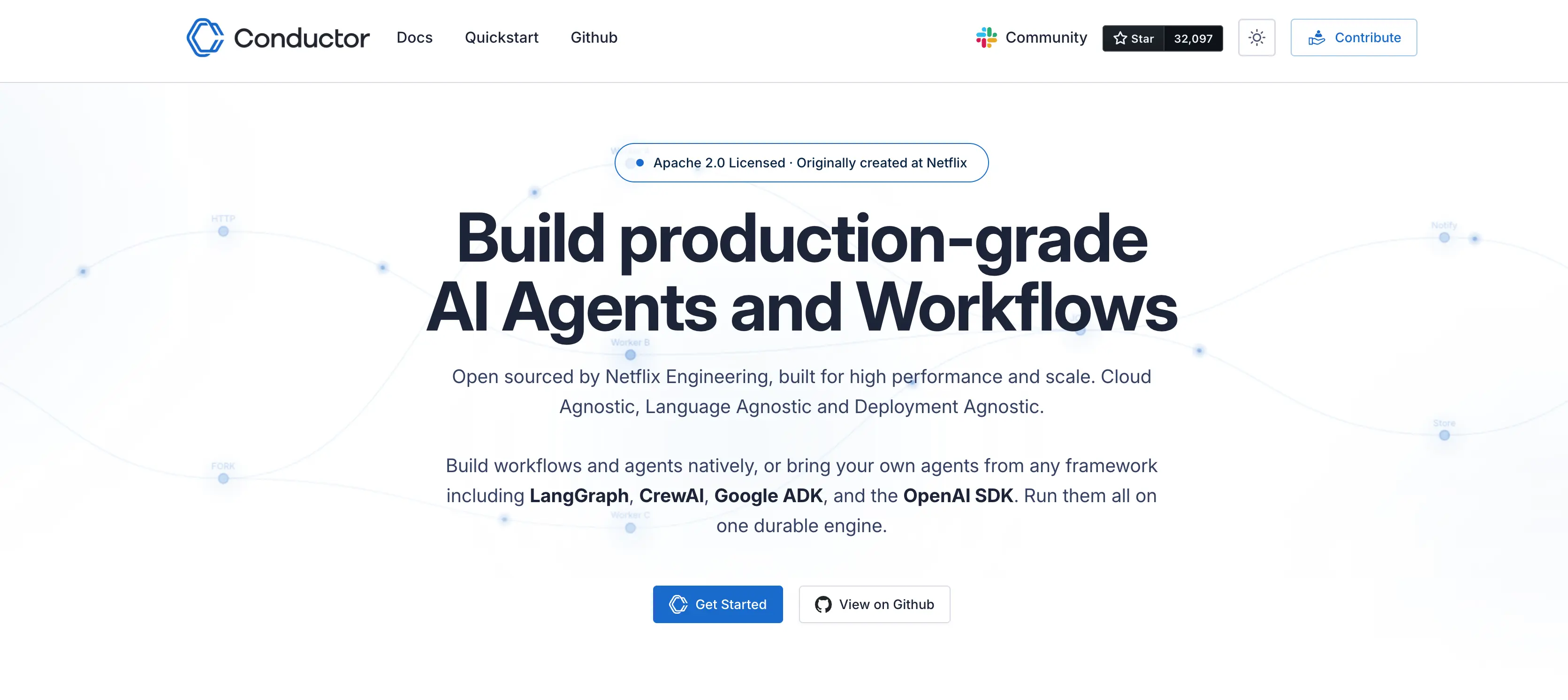
Netflix Conductor is the open source orchestration engine that popularized JSON-defined workflows at scale. It continues today as Conductor OSS, maintained under open governance for teams running it themselves.
Features
- Workflows defined as JSON, with a large library of community task types
- Proven at very large scale, originally built to run Netflix's own operations
- Active open source development, with a self-hosted UI for monitoring and debugging runs
Cons
- Running Conductor OSS yourself means owning its full operational overhead
- JSON-based workflow definitions get unwieldy fast for complex branching logic
- Community momentum has shifted toward newer engines like Temporal in recent years
Pricing
Conductor OSS is free and open source. This entry covers the self-hosted engine only; there's no vendor-published managed pricing to compare here.
Teams outgrowing a self-hosted Conductor deployment tend to hit the same wall as teams running an Autosys migration off a legacy scheduler: the engine still runs, but nobody wants to be the one maintaining it.
F. AWS Step Functions
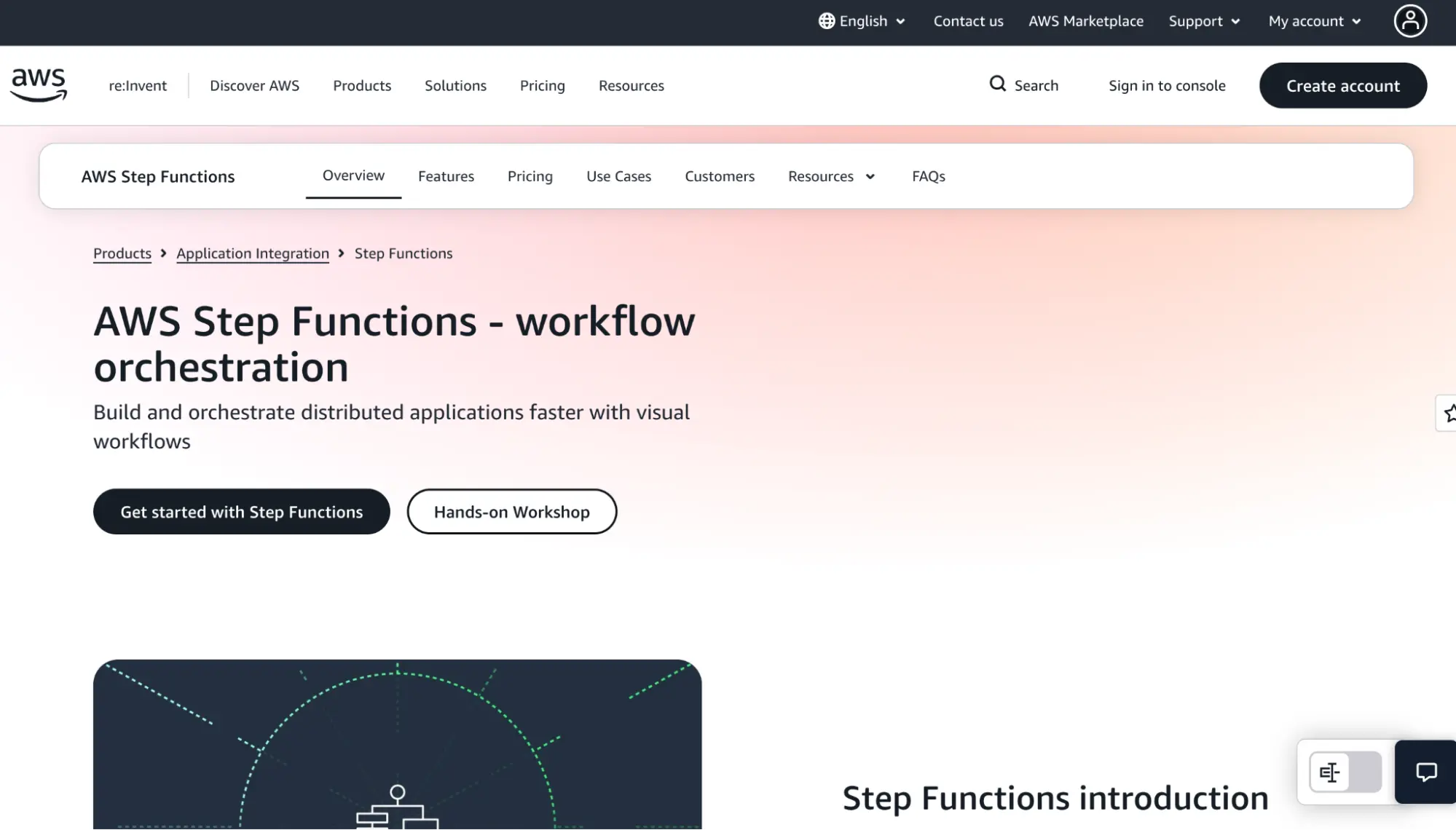
AWS Step Functions is Amazon's native state machine service for coordinating Lambda functions and other AWS services into deterministic, visual workflows.
Features
- Visual state machine definitions with Standard and Express workflow types
- Deep native integration with Lambda, S3, DynamoDB, and the rest of the AWS ecosystem
- Bedrock AgentCore available alongside it for teams that also need AI agent execution
Cons
- Deterministic orchestration and AI agent orchestration live in two separate services, not one
- Effectively locks workflow logic into the AWS ecosystem
- No low-code builder for non-engineers; this is a developer-first tool
Pricing
After a free tier of 4,000 state transitions a month, Standard Workflows cost $0.000025 per state transition.
G. Google Cloud Workflows
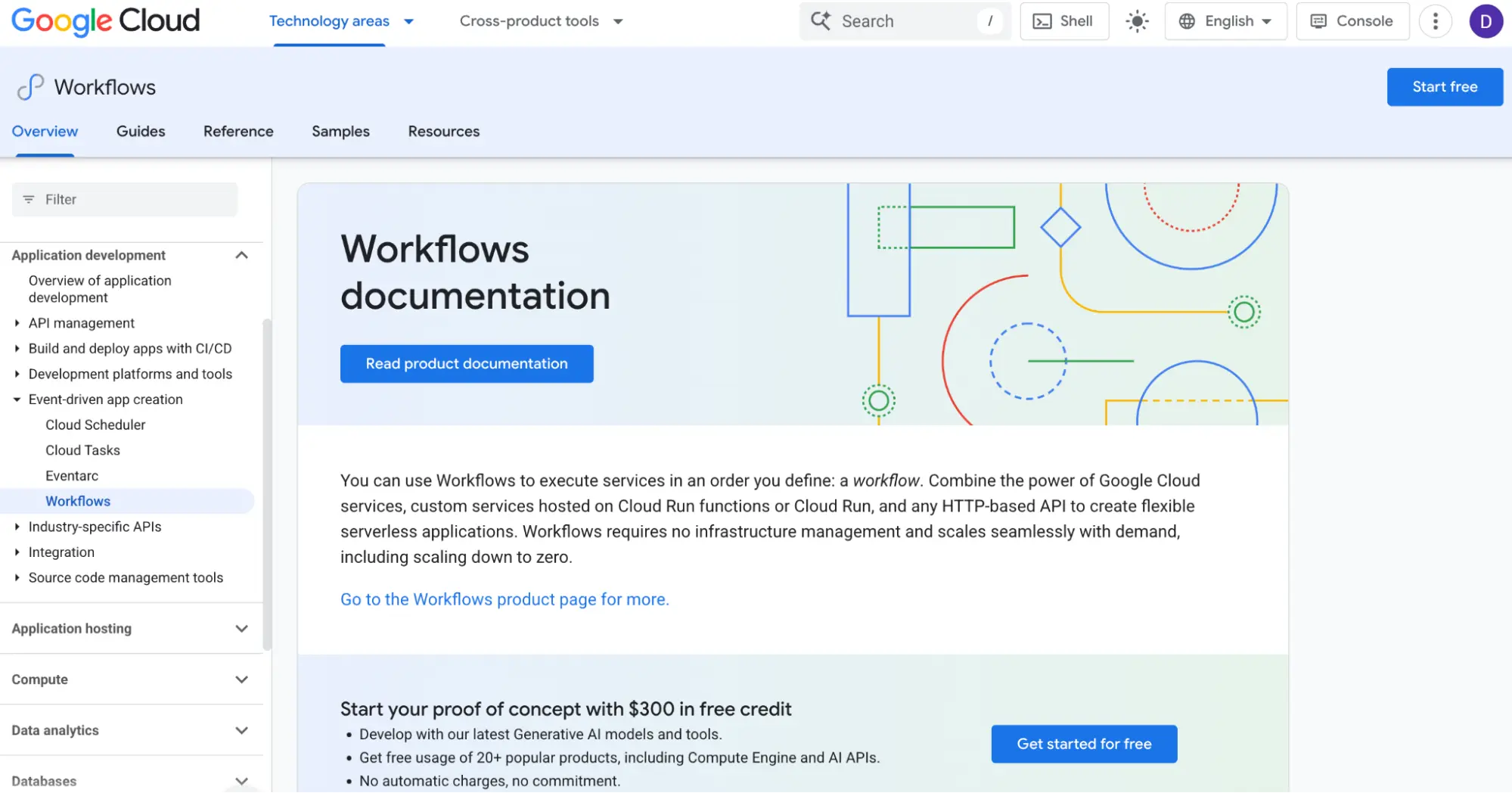
Google Cloud Workflows handles deterministic service orchestration on Google Cloud, paired with Vertex AI Agent Builder for teams that also need to manage AI agents.
Features
- Serverless, consumption-based orchestration for chaining Google Cloud and HTTP-based services
- Vertex AI Agent Builder handles the AI agent side, with 200+ models available in Model Garden
- Identity and Access Management (IAM) controls agent and workflow permissions natively
Cons
- Cloud Workflows itself handles deterministic orchestration only, not AI agents
- Agent Designer, the low-code visual tool, remains in Preview
- Strongest when a team is already standardized on Google Cloud
Pricing
After a free tier, internal steps cost $0.01 per 1,000 and external steps cost $0.025 per 1,000.
H. Prefect
Prefect positions itself as a lighter-weight alternative to Airflow for Python-native dataflow orchestration, without the DAG-authoring overhead Airflow is known for.
Features
- Workflows defined as plain Python functions rather than a separate DAG syntax
- Dynamic, runtime-defined workflows instead of Airflow's static DAG structure
- Prefect Cloud for managed orchestration, with self-hosted Prefect Server as the open source option
Cons
- Smaller ecosystem and operator library than Airflow's decade-long head start
- Built for data and dataflow orchestration, not general business process workflows
- No native human-in-the-loop or AI agent step primitives
Pricing
Free tier available for individuals and small teams. Paid Cloud tiers scale by usage; confirm current rates directly with Prefect, since published per-seat figures vary by source.
I. Argo Workflows
Argo Workflows is the Kubernetes-native option: workflows are defined as Kubernetes custom resources, and every step runs as a container.
Features
- Workflows defined as YAML, running natively on any Kubernetes cluster
- Strong fit for CI/CD pipelines, machine learning training jobs, and batch data processing
- Part of the broader Argo ecosystem alongside Argo CD and Argo Events
Cons
- Requires a Kubernetes cluster; there's no standalone deployment path
- YAML-based workflow definitions get verbose fast for complex logic
- No built-in human-in-the-loop or AI agent orchestration primitives
Pricing
Free and open source. Costs are whatever your Kubernetes infrastructure already costs to run.
Worth a read: Why Use Unmeshed Instead of CRON or In-House Workflow Engines covers the exact tipping point where a homegrown scheduler stops being the cheap option.
4. Which Workflow Orchestration Tool Actually Fits
If you want AI steps, deterministic rules, APIs, and human approval in one place without stitching four systems together, that's what Unmeshed is built for, and it's the same reasoning behind 5 Ways Orchestration Drives Efficiency and Innovation: consolidation tends to beat a pile of point solutions.
If your workflows are pure code with no need for a visual builder or human steps, Temporal is the strongest fit. Data teams scheduling batch pipelines should look at Airflow or Prefect depending on how much DAG overhead they want to carry.
Teams already deep in one cloud should lean on that cloud's native option, AWS Step Functions or Google Cloud Workflows, and accept the lock-in that comes with it. Regulated, developer-heavy organizations that want a standardized process notation should look at Camunda. Teams already running Netflix Conductor and staying self-hosted should look at Conductor OSS directly, and teams already living inside Kubernetes have a natural next step in Argo Workflows.
This is exactly the kind of orchestration tool comparison worth revisiting every year or two, since the workflow engine comparison that made sense in 2023 rarely matches what a team actually needs by 2026.
See where Unmeshed fits your stack. Try Unmeshed free, or talk to us about migrating off Conductor or a homegrown scheduler.
Frequently Asked Questions
Sources
Still stitching together four orchestration tools?
See where Unmeshed fits your stack
Try Unmeshed free, or talk to us about migrating off Conductor, Autosys, or a homegrown scheduler.