TLDR
- Teams leave CrewAI over specific limits. The free hosted plan stops at 50 executions a month; SSO and a dedicated VPC need custom Enterprise, and the role model doesn't fit every problem.
- "CrewAI can't branch" is outdated, because Flows now has routing, saved state, and human feedback.
- The six alternatives are LangGraph, Microsoft Agent Framework, Google ADK, AG2, the OpenAI Agents SDK, and Unmeshed. Each has one honest tradeoff.
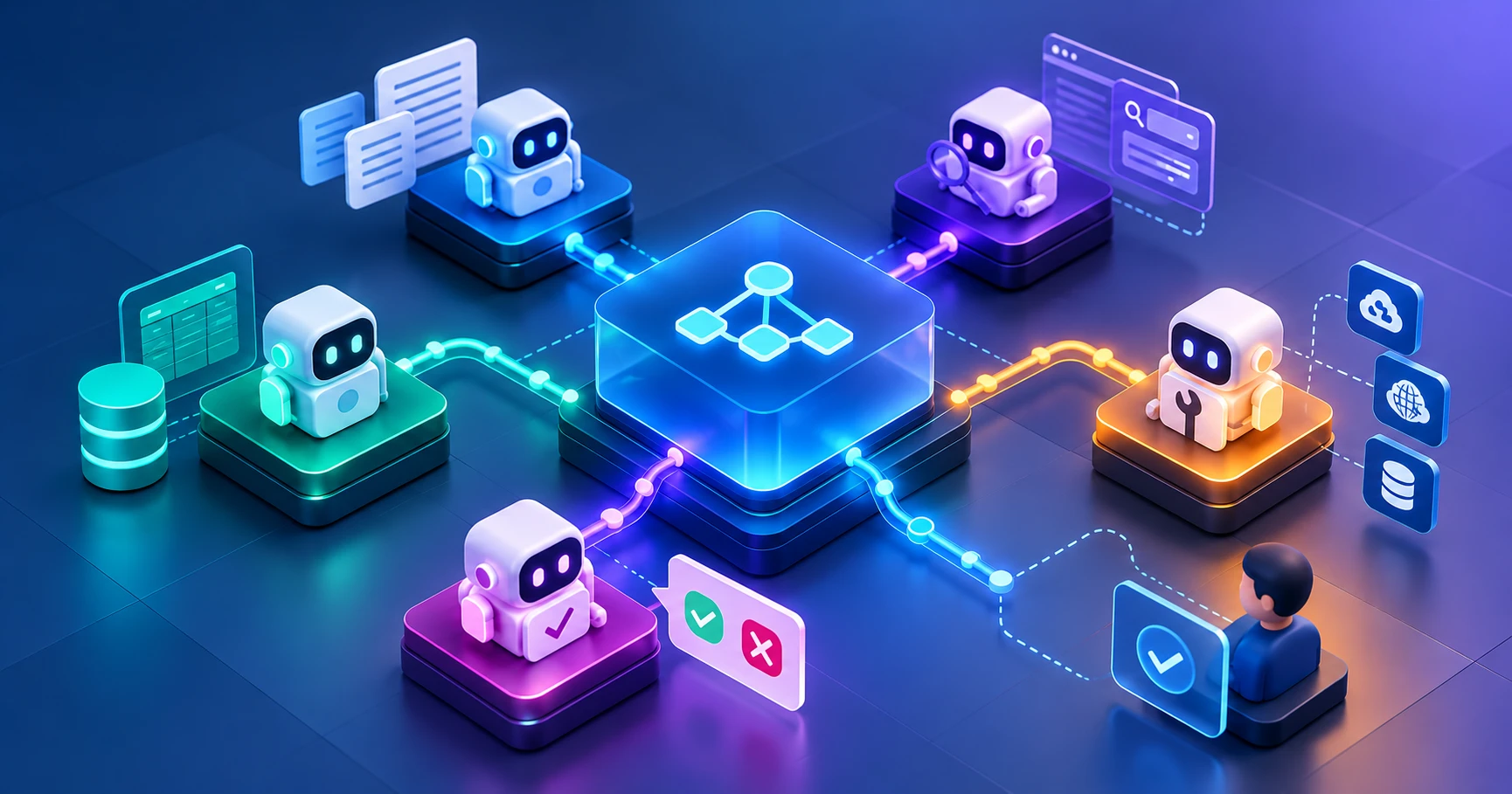
- Frameworks shape how agents think. A runtime like Unmeshed handles durability, approvals, spend limits, and audit, and it can run your existing crews.
- Stay on CrewAI if your agents map to roles, your volume fits your plan, and Flows covers your routing. Otherwise, move in stages by wrapping crews as workflow steps.
The best CrewAI alternatives for multi-agent systems are LangGraph, Microsoft Agent Framework, Google ADK, AG2, the OpenAI Agents SDK, and Unmeshed, and the right one depends on why you're leaving CrewAI.
Most lists skip that part, and several still repeat complaints that no longer hold. CrewAI Flows now supports conditional routing, persisted state, and human feedback, so "it can't branch" is out of date.
The real limits are narrower. The free hosted plan stops at 50 executions a month, SSO and your own VPC sit behind a custom Enterprise deal, and the role-based crew model doesn't fit every problem.
This guide sorts six CrewAI competitors by the limit you actually hit, says what each one fixes, and tells you when staying on CrewAI is the better call.
One note on bias. Unmeshed is our product, and it's on the list. We'll say what it does well and what it doesn't do, and you can judge the rest.
1. Why Do Teams Look for CrewAI Alternatives?
Teams look for CrewAI alternatives when they hit a specific limit, usually the 50 execution free plan, governance locked behind Enterprise, a crew model that fights their workflow, or a missing durability layer. Outdated complaints about branching no longer apply.
Here are the four limits we see most, and what is true about each.
- The free plan is small: The hosted free tier includes 50 workflow executions a month and 2 automations, according to CrewAI's pricing page. Fine for a prototype, tight for anything with real traffic.
- Enterprise controls cost a conversation: SSO through Entra or Okta, role-based access, and a dedicated VPC are listed on the custom Enterprise plan, which also comes with a 45-day onboarding.
- The crew model doesn't fit everything: Role-based agents with goals and backstories suit some problems. They add friction when you want an explicit graph, a fixed pipeline, or one agent with many tools.
- Production needs more than a framework: Retries across crashes, approvals, spend limits, and audit trails live in a layer around the agents, not in the agents themselves.
What is not a limit anymore is branching. Flows has @router for conditional paths, @persist for saved state, and @human_feedback for approvals. If a review told you CrewAI can't branch, check the date on it.
If you want CrewAI's own pricing side by side, our CrewAI alternative comparison page covers it. Cost is also a design question for agents, which we cover in token efficiency.
2. What Should You Look for in a CrewAI Alternative?
Judge a CrewAI alternative on five things, which are how it coordinates agents, whether it survives a crash, how it handles human approval, what it costs to run, and who maintains it. A multi-agent framework comparison that skips these will mislead you.
Gartner expects over 40% of agentic AI projects to be canceled by the end of 2027, citing cost, unclear value, and weak risk controls. Those are the same five areas.
| Criterion | What to Ask |
|---|---|
| Coordination model | Roles, graphs, handoffs, or conversations? Does it match how your problem is shaped? |
| Durability | If the process dies at step six, does it resume at step six? |
| Human in the loop | Can a person approve or edit a step and the run waits? |
| Cost and licensing | Is it open source, hosted, or both? What happens past the free limit? |
| Maintenance | Who ships fixes, and how often do releases break your code? |
If any of these terms are new, our guide to AI orchestration covers the basics. For the broader stack that agents run on, see agent infrastructure.
3. What Are the 6 Best CrewAI Alternatives for Multi-Agent Systems?
The six best CrewAI alternatives are LangGraph, Microsoft Agent Framework, Google ADK, AG2, the OpenAI Agents SDK, and Unmeshed. The first five are frameworks that shape how agents reason. Unmeshed is a runtime that runs agents, including CrewAI crews, as governed steps.
| Tool | What It Fixes | License |
|---|---|---|
| LangGraph | Explicit graphs with durable state | MIT |
| Microsoft Agent Framework | Graph workflows with checkpointing, Python and .NET | MIT |
| Google ADK | Graph workflows with agent-to-agent delegation | Apache 2.0 |
| AG2 | Conversation based multi agent patterns | Apache 2.0 |
| OpenAI Agents SDK | A small set of primitives with built-in tracing | Open source |
| Unmeshed | Durability, approvals, spend limits, and audit around any agent | Platform, free tier |
1. LangGraph
LangGraph fixes the crew model's lack of an explicit graph. It is a low-level orchestration framework for stateful agents, where you define nodes and edges yourself and the framework saves state at each step so a run can resume.
- Durable execution, so a run can resume after a failure
- Human-in-the-loop support, plus short- and long-term memory
- MIT-licensed, with LangSmith available for debugging and deployment
- A JavaScript version, LangGraph.js, for TypeScript teams
Real tradeoff: You write more code than you would in CrewAI, and the LangChain ecosystem pulls you toward its other tools.
We compare it further in our guide to LangGraph alternatives.
2. Microsoft Agent Framework
Microsoft Agent Framework fits teams on Azure or .NET that want graph workflows with checkpointing in one supported toolkit. The open-source framework supports Python and .NET and ships migration guides from AutoGen and Semantic Kernel.
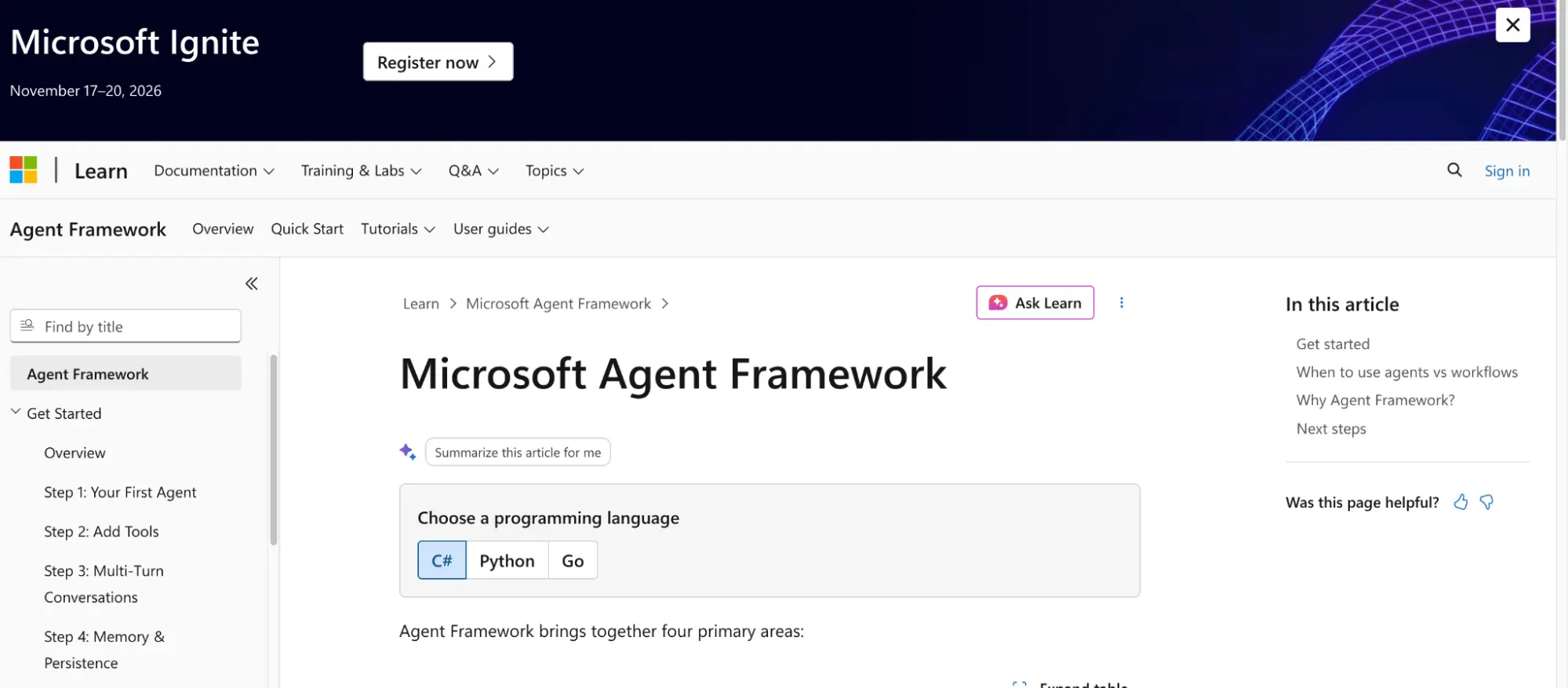
- Graph workflows with sequential, concurrent, handoff, and group collaboration patterns
- Checkpointing, streaming, and time travel for debugging
- Human in the loop and OpenTelemetry support
- MIT licensed
Real tradeoff: It reached general availability in April 2026, so its production record is shorter than older frameworks.
3. Google ADK
Google ADK fits teams that want a graph runtime and agent to agent delegation in one open source toolkit. Version 2.0 of the Agent Development Kit adds a workflow runtime with routing, fan out and fan in, loops, retries, and nested workflows.
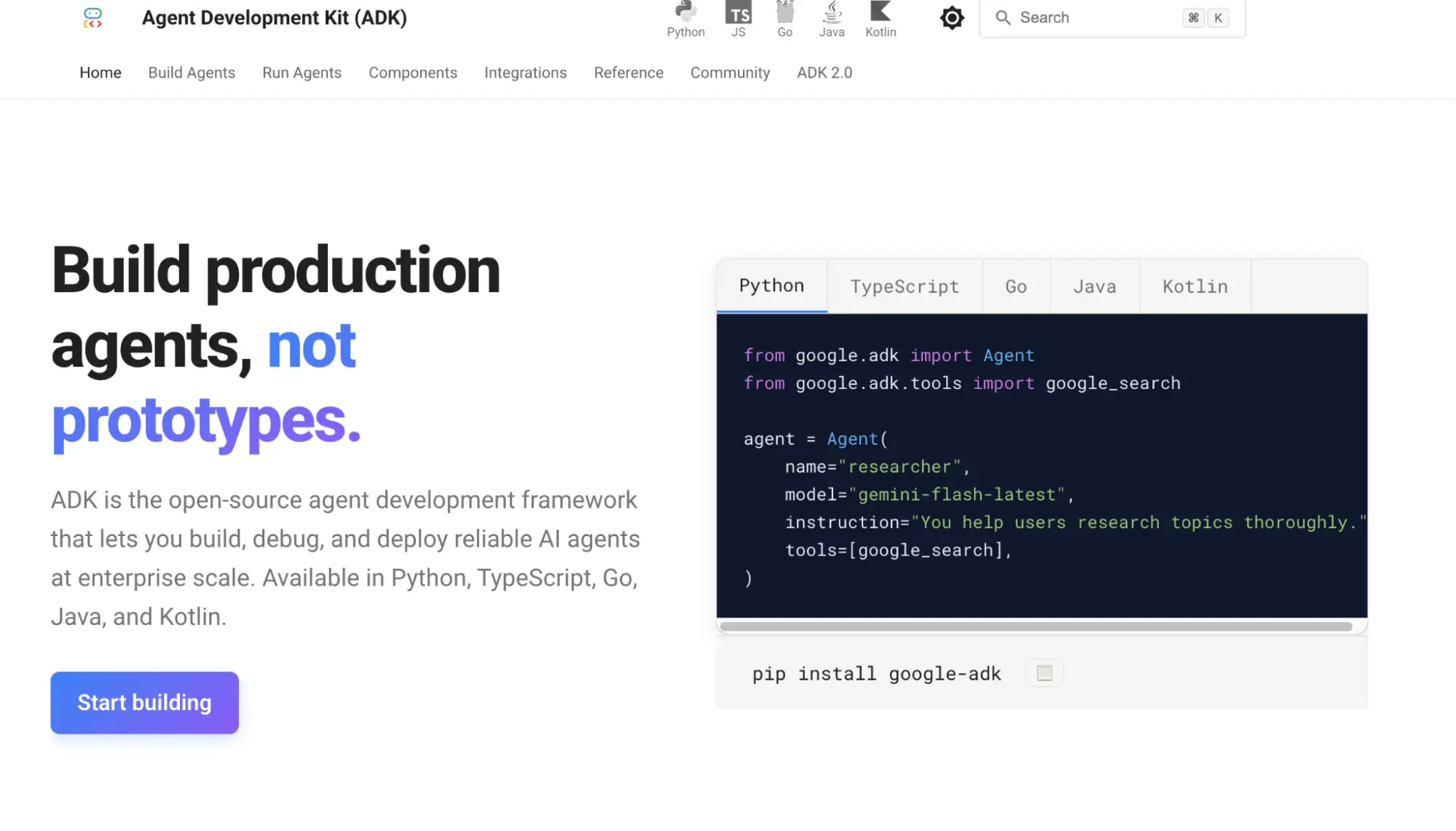
- A Task API for delegating work between agents
- State, human-in-the-loop, and dynamic nodes inside workflows
- Apache 2.0 licensed, Python 3.10 or later
Real tradeoff: Version 2.0 includes breaking changes from 1.x, so budget time if you build on older examples.
4. AG2
AG2, formerly AutoGen, fits teams that think of multi-agent systems as conversations between agents. The Apache 2.0 project is maintained by volunteers from several organizations, and version 1.0 is a newly rebuilt, protocol driven framework.
- Agents, tools, and a human-in-the-loop hook
- Networks with typed channels for conversation, consulting, discussion, and workflow patterns
- The earlier version lives on as AG2 Classic, still maintained
Real tradeoff: Version 1.0 is not a drop-in upgrade from AG2 Classic, and volunteer maintenance means you should check release activity before committing.
5. OpenAI Agents SDK
The OpenAI Agents SDK fits teams that want the smallest possible set of building blocks. The SDK is the production upgrade of Swarm and centers on agents, handoffs or agents as tools, and guardrails, with tracing built in from the start.
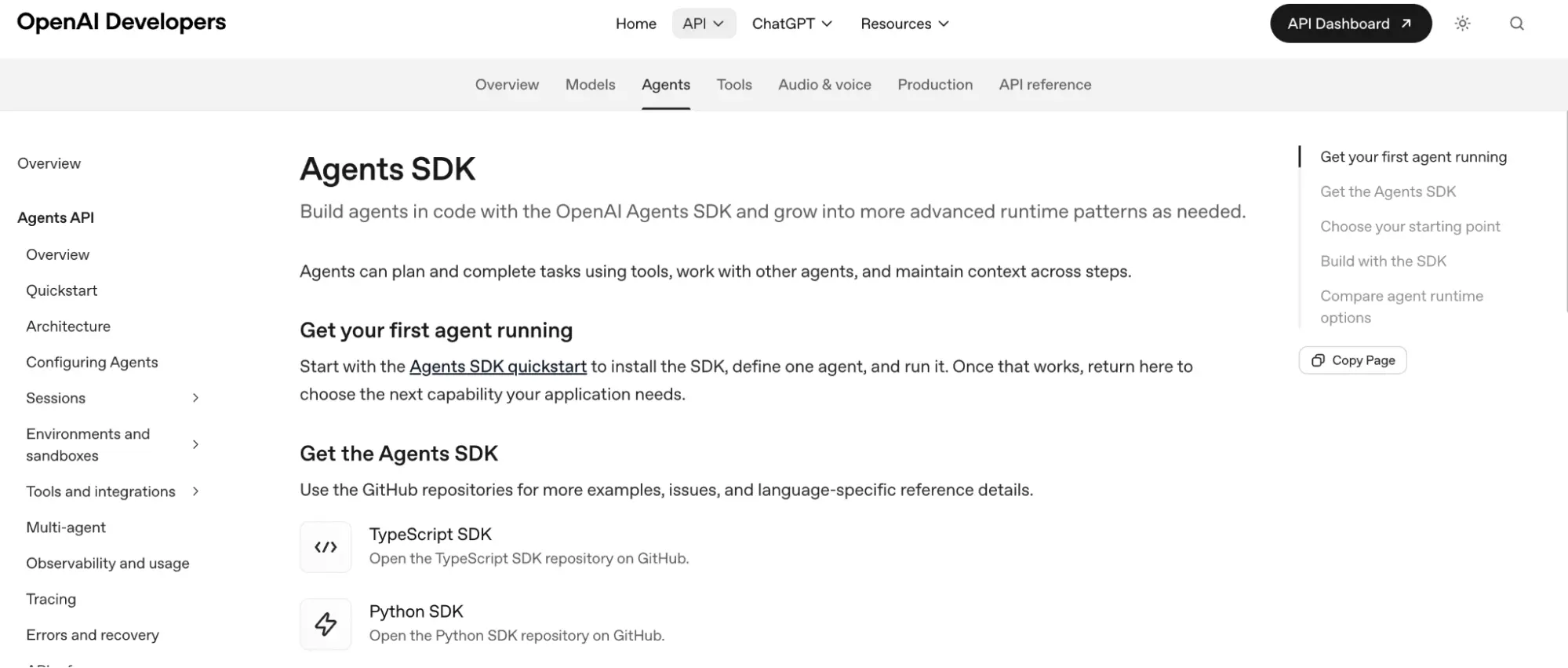
- Built-in tracing and sessions for conversation memory
- Human in the loop and MCP support
- Works with non-OpenAI models through adapters
Real tradeoff: OpenAI models are the default path. Surviving a process crash is something you add around the SDK rather than get from it.
6. Unmeshed
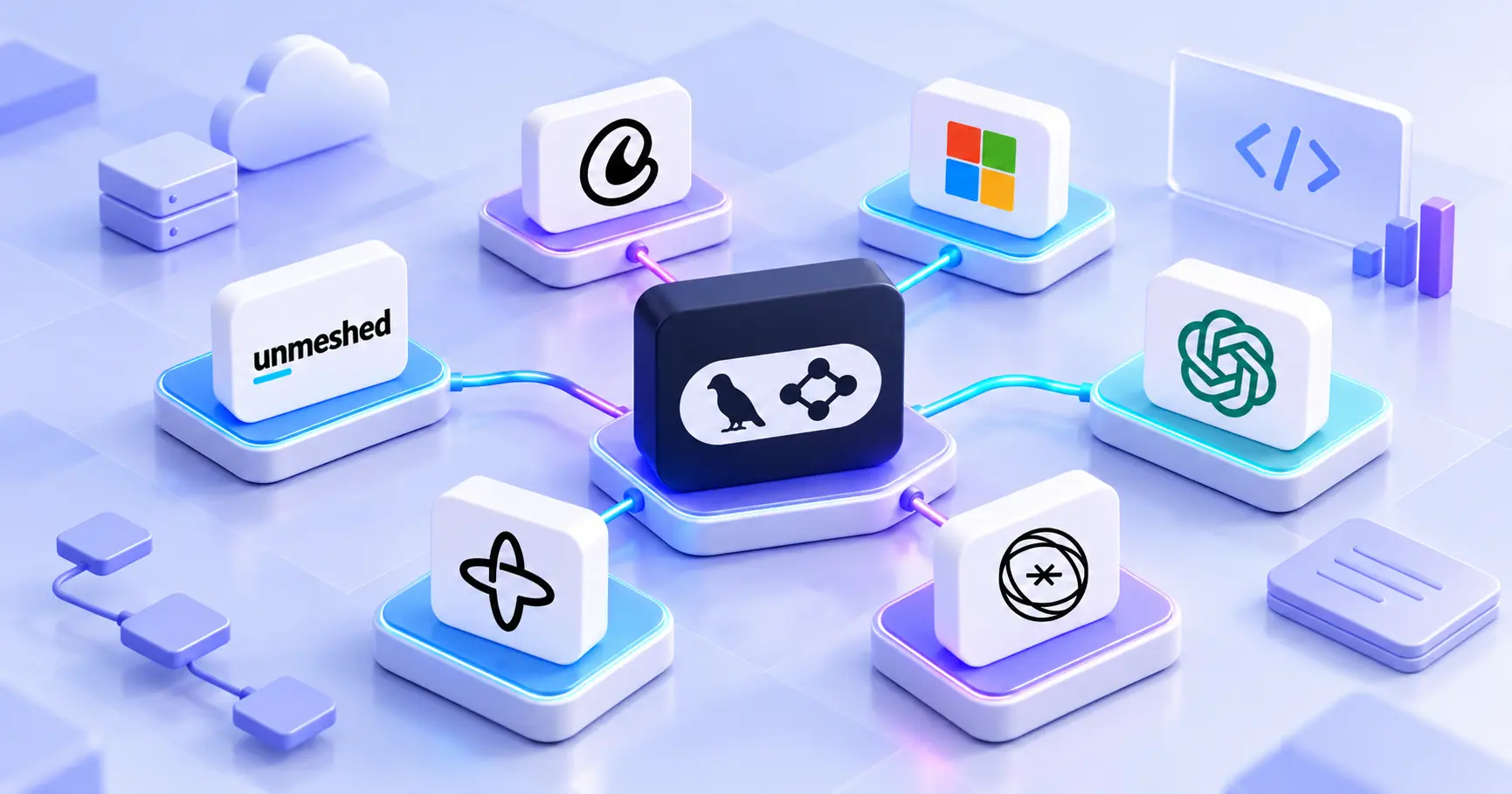
Unmeshed fixes what frameworks leave open, which is running agents reliably in production. The agent orchestration platform runs agents as steps in durable workflows, with retries, approvals, spend limits, and a full run history, and it can run CrewAI crews too.
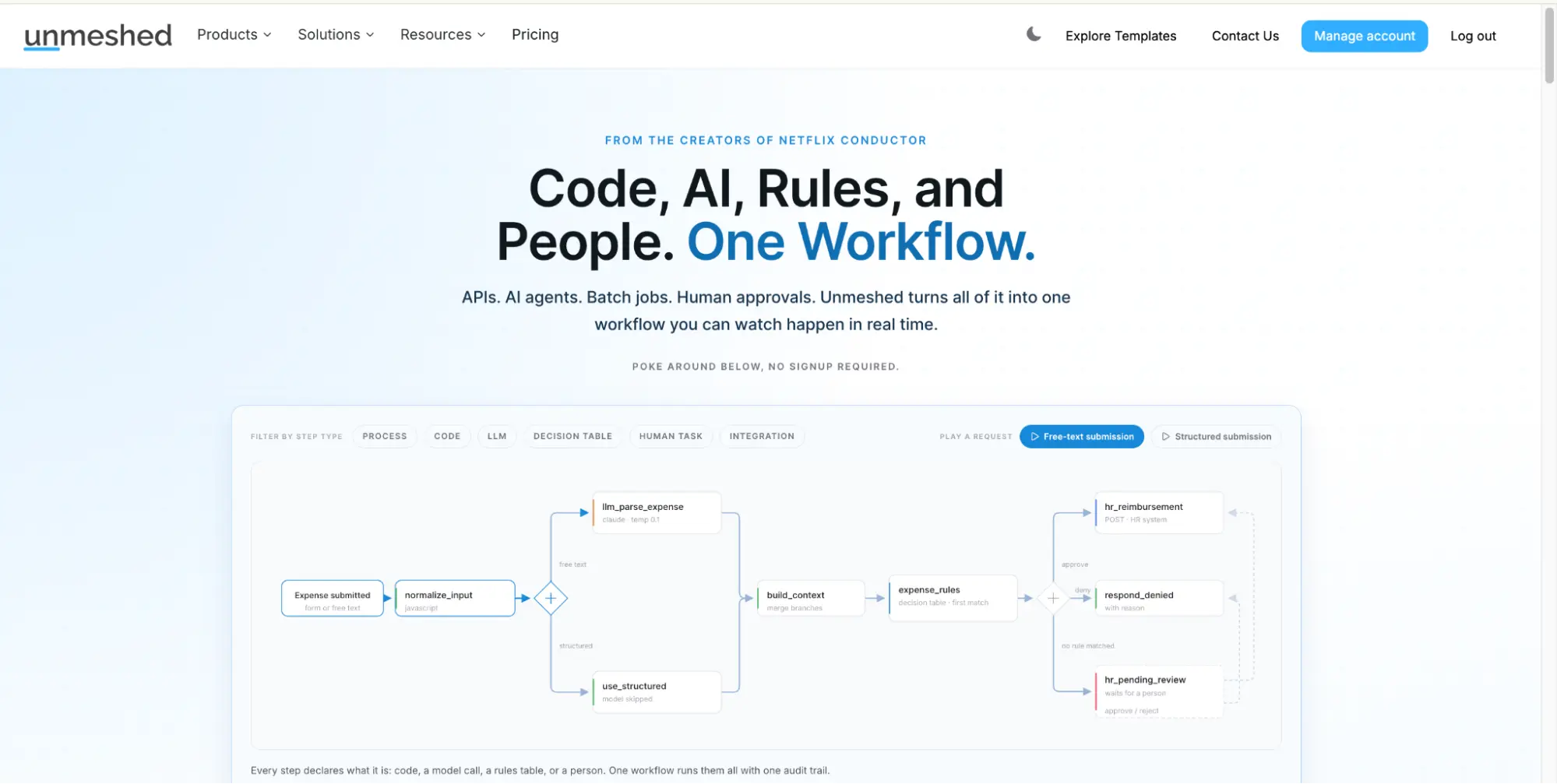
- Agents are bound to a fixed tool set that the runtime enforces, and each agent can have a spend ceiling that throttles it or switches it to a cheaper model. See AI agent governance.
- Human-in-the-loop approvals pause a run until a person decides.
- Built on workflows by the creators of Netflix Conductor, with SDKs for Java, Go, Python, and TypeScript.
- Model-agnostic and MCP native. The free tier includes 2,000 workflow executions a month.
Real tradeoff: Unmeshed is not a reasoning framework and doesn't replace CrewAI's role model. If you like how your crews think, keep them and run them inside Unmeshed.
Keep Your Crews. Add The Runtime.
Call your existing CrewAI crew from an Unmeshed worker and get durable state, retries, approvals, and an audit trail without a rewrite.
Add The Runtime4. CrewAI vs Alternatives: How Do the Six Compare?
In a CrewAI vs alternatives comparison, the main differences are coordination model and durability. CrewAI uses roles and Flows; LangGraph, Microsoft, and ADK use graphs, AG2 uses conversations, and only Unmeshed treats durability as a separate runtime layer.
This multi-agent framework comparison keeps cells short on purpose. Check each project's docs before you commit, because all of them move fast.
| Tool | Coordination | Durability | Human in Loop | Best For |
|---|---|---|---|---|
| CrewAI | Roles, crews, Flows | Persisted Flow state, SQLite by default | Yes, in Flows | Role-based agent teams |
| LangGraph | Explicit graph | Durable execution | Yes | Custom stateful agents |
| Microsoft Agent Framework | Graph workflows | Checkpointing | Yes | Azure and .NET teams |
| Google ADK | Graph workflows, Task API | Workflow state | Yes | Google Cloud teams |
| AG2 | Conversations, networks | Knowledge store | Yes, via hook | Conversational agents |
| OpenAI Agents SDK | Handoffs, agents as tools | Sessions | Yes | Small, simple systems |
| Unmeshed | Workflow with agent steps | Durable execution | Yes | Governed production runs |
If your real question is how multi-agent systems coordinate in general, read our guide to agentic orchestration.
5. Are There Open Source CrewAI Alternatives?
Yes, most CrewAI alternatives are open source. LangGraph and Microsoft Agent Framework use the MIT license, Google ADK and AG2 use Apache 2.0, and the OpenAI Agents SDK is an open-source Python package. Unmeshed is a platform with a free tier.
Not all CrewAI alternatives are equal on this front, so read the license for the version you plan to use. Open source means you can read the code and run it yourself. It doesn't mean it's free to operate. You still pay for hosting, models, and the engineers who keep it running.
When you search for agent framework alternatives, check three things beyond the license. See who maintains the project, how often releases break your code, and whether the project is a library or a full runtime. A library gives you building blocks. A runtime gives you something that keeps running.
6. How Do CrewAI Alternatives Handle Durability and Governance?
CrewAI alternatives handle durability and governance differently. LangGraph and ADK keep state inside the framework, the OpenAI Agents SDK adds sessions, and a workflow engine like Unmeshed runs retries, approvals, spend ceilings, and audit as one layer.
Frameworks answer the question of how an agent thinks. Governance answers a different question, which is what the agent is allowed to do and who can see it. Teams often find out the difference after the first incident.
| Need | In a Framework | In a Runtime Like Unmeshed |
|---|---|---|
| Resume after a crash | Available in some, usually with setup | Built in through durable execution |
| Limit which tools an agent can use | Convention in your code | Enforced by the runtime |
| Cap spend per agent | You build it | Per-agent ceilings with throttle or cheaper model |
| Approvals | Supported in most | Routed to a person, with the run paused |
| Audit trail | Tracing, often a separate tool | Full run history by default |
For the concept behind the first row, see durable execution. For measuring whether agents do the job well, see agent evals.
7. When Should You Stay on CrewAI?
Stay on CrewAI when your problem is a team of role-based agents, you're within the free plan limits or already on Enterprise, and Flows covers your branching. Switching costs time, and none of the six beats it on that fit.
- Your agents map cleanly to roles, goals, and tasks
- Your volume fits the plan you have
- Flows handles your routing and saved state
- Your team already knows it
Before you shop for CrewAI alternatives, check whether you need one. If you tick all four, the answer is probably to keep it. If your only gap is production controls around it, add a runtime instead of replacing the framework.
8. How Do You Move Off CrewAI Without Rewriting Everything?
You can move off CrewAI in stages by wrapping existing crews as steps, then replacing the coordination layer one workflow at a time. Keep the agent logic you've tested and change only what runs and governs it.
- Pick one crew and run it as a step inside a workflow. Nothing about the crew changes.
- Add retries, an approval step, and tracing around it. Our guide to workflow orchestration covers the options.
- Move the next crew. Replace the framework only where it truly blocks you.
This order keeps risk low, and it makes the case for or against the other CrewAI alternatives with real data from your own workload. You learn what the new layer does before you commit to it.
Final Thoughts
Pick the alternative that fixes your actual limit. If CrewAI's graph is the problem, look at LangGraph, Microsoft Agent Framework, or Google ADK. Of all the CrewAI alternatives here, the best fit is the one that matches your problem, not the one with the most stars. If conversation style fits, try AG2. If you want few moving parts, try the OpenAI Agents SDK.
If your crews work but production feels risky, you may not need a new framework. You may need a runtime around the one you have. That's the gap Unmeshed fills.
Frequently Asked Questions
Sources
Weighing a move off CrewAI?
Tell us what's blocking you. We'll say whether switching helps.
Share your crew setup and the limit you're hitting. We'll tell you whether a new framework or a runtime around the one you have is the better fix.